What are Fly Ash Bricks?

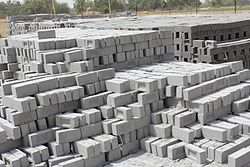
Fly Ash Bricks are advanced construction materials manufactured using fly ash generated from thermal power plants. Instead of disposing this industrial waste, it is scientifically processed and converted into high-strength building bricks.

These bricks are:

  • Eco‑friendly
  • Uniform in shape
  • Stronger than traditional bricks

They are considered a modern replacement for red clay bricks in today's construction industry.

Origin & Development in India

  • Fly ash brick technology was developed globally in the early 1900s
  • In India, usage increased significantly after 1990–2000
  • Strongly promoted by the Government of India to reduce environmental pollution

Government policies now encourage:

  • Use of fly ash in construction
  • Reduction of top soil usage
  • Adoption of eco‑friendly materials

Today, fly ash bricks are widely used in:
  • Government buildings
  • Infrastructure projects
  • Smart cities
flyash_development

Raw Materials (Ingredient Composition) 

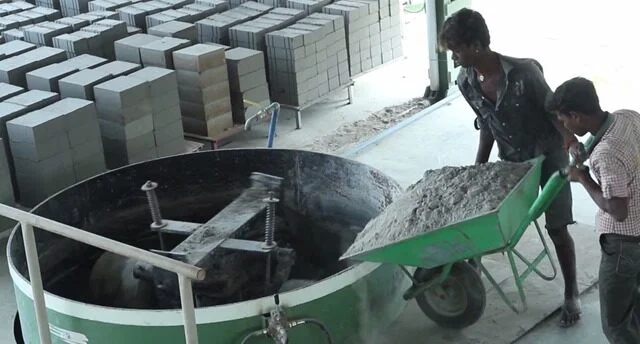
Fly ash bricks are made using a controlled mix of:

Fly Ash – 60–70% (main ingredient, industrial waste) 

Cement – 8–12% (binder)

Sand / Stone Dust – 20–30% (filler material)

Water – For mixing and curing

This combination ensures:
  • High compressive strength
  • Low water absorption
  • Long durability
flyash_raww
Important Note:

No topsoil is used in the production of fly ash bricks, preserving agricultural land and promoting sustainability.

Manufacturing Process (Hydraulic Press Method)

Step‑by‑step production of high‑strength fly ash bricks b
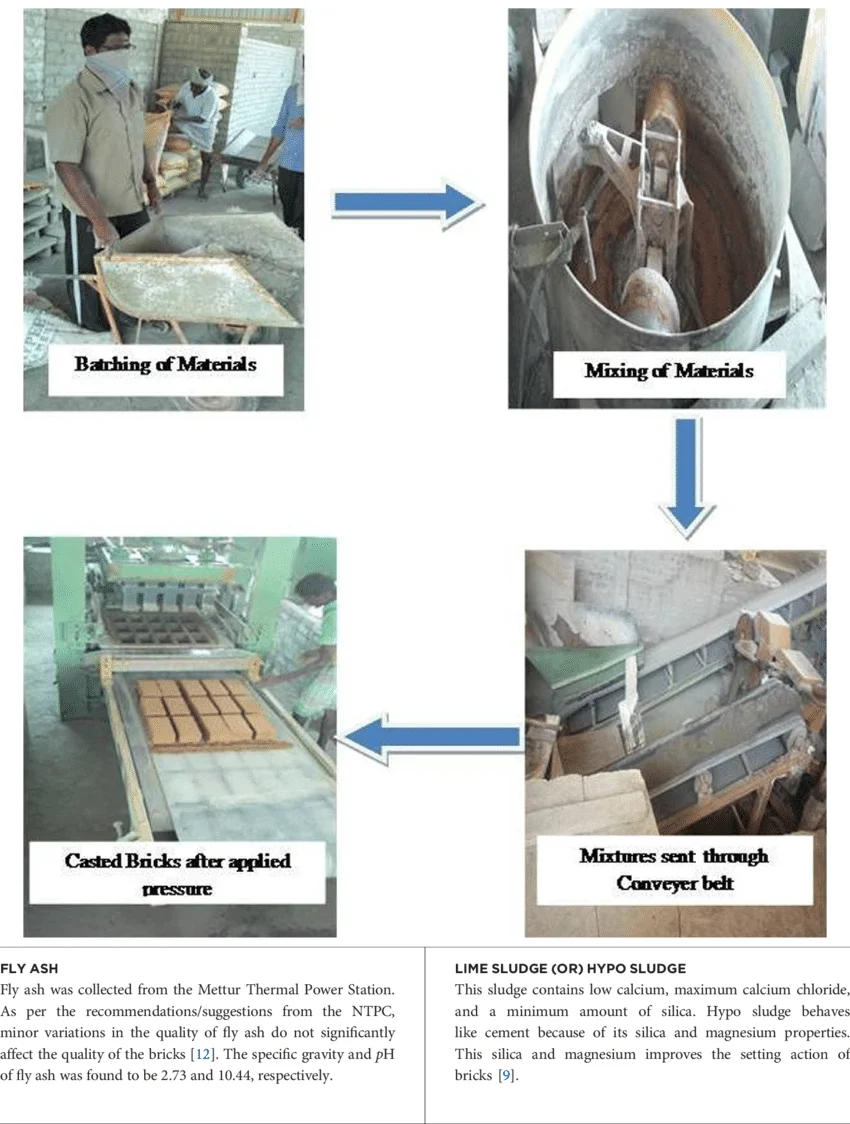
Hydraulic press production line for fly ash bricks

1
Raw Material Mixing
  • Fly ash, cement, sand, and water are mixed uniformly
  • Proper proportion is critical for strength
2
Hydraulic Compression

The mixture is fed into a hydraulic press machine. High pressure compacts the material into moulds.

  • Dense structure
  • High strength bricks
3
Demoulding
  • Bricks are removed from mould
  • They have uniform shape and smooth edges
4
Curing
  • Bricks are cured using water or natural methods
  • No kiln firing is required

Advantage:

  • Low energy consumption
  • Reduced carbon emission
5
Final Product
  • Strong, ready-to-use fly ash bricks

Quality Assurance: Tested as per IS 12894 for compressive strength and water absorption.o
fly_build

Standard Sizes Available 

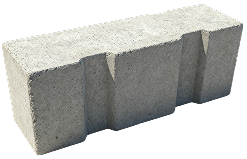
  • 190mm × 190mm × 90mm
  • 230mm × 110mm × 70mm
  • 250mm × 120mm × 75mm

Custom sizes can also be produced for large projects. 

Types of Walls You Can Build 

  • External walls
  • Internal walls
  • Partition walls
  • Boundary walls
  • Load‑bearing structures
  • Non‑load‑bearing walls

Suitable for: Houses | Apartments | Commercial buildings | Industrial structures

Masonry Process (How to Use)

1. Surface Preparation

Clean and level base surface.

2. Mortar Application

Use cement mortar or block adhesive.

3. Brick Laying

Place bricks in straight alignment; maintain level and plumb.

4. Joint Thickness

Keep joints thin (8–10 mm).

5. Curing

Minimal curing required compared to clay bricks.

Result

  • Faster construction
  • better finish.
  • Hello
  • Bye

Fly Ash Bricks vs Red Clay Bricks

Why fly ash bricks outperform traditional clay bricks

Feature Fly Ash Bricks Red Clay Bricks
Raw Material Industrial waste Natural soil
Strength High (7.5–10 MPa) Medium (3.5–5 MPa)
Water Absorption Low (10–15%) High (20–25%)
Finish Smooth Rough
Eco‑Friendly Yes No
Uniformity Excellent Poor

Fly ash bricks are clearly superior in modern construction.

Complete Advantages of Fly Ash Bricks

1. Eco‑Friendly Construction

  • Uses industrial waste
  • Reduces pollution
  • Saves natural soil
  • Protects agricultural land

2. High Compressive Strength

  • Around 7.5–10 MPa
  • Suitable for load-bearing structures

3. Low Water Absorption

  • Only 10–15%
  • Prevents dampness and seepage

4. Smooth Surface Finish

  • Reduces plaster requirement
  • Saves material cost

5. Lightweight

  • Easier to transport
  • Reduces structural load

6. High Durability

  • Long lifespan
  • Resistant to wear and tear

7. Crack Resistance

  • Low shrinkage
  • No deformation

8. Fire Resistance

  • Suitable for fire-safe buildings

9. Sound Insulation

  • Reduces noise transmission

10. Termite & Biological Resistanc

  • No termite attack
  • Resistant to fungus and bacteria

11. Faster Construction

  • Uniform size = easy alignment
  • Saves labour time

12. Cost Savings

  • Less mortar required
  • Less plaster
  • Lower labour cost

13. Energy Efficiency

  • Better thermal insulation
  • Keeps building cool

14. No Kiln Burning

  • No fuel consumption
  • Less environmental impact

15. Government Support

  • Encouraged by policies
  • Used in public infrastructure

16. Sustainable Development

  • Supports green building concept
  • Reduces construction waste

17. Easy Handling

  • Uniform shape
  • Easy stacking

18. Weather Resistance

  • Performs well in different climates

19. Low Maintenance

  • Less repair required

20. Future Material

  • Increasing demand
  • Widely adopted in modern projects

Technical Specifications 

  • Compressive Strength: 7.5–10 MPa 
  • Water Absorption: 10–15%
  • Density: Uniform (~1700–1850 kg/m³)
  • Load Bearing Capacity: High

Environmental Benefits 

  • Reduces carbon footprint
  • No soil excavation
  • Utilizes waste material

Ideal for green and sustainable construction.

Why Builders Prefer Fly Ash Bricks

  • Strong and reliable
  • Easy to work with
  • Better finish
  • Lower cost
  • Eco‑friendly

Used in: Residential • Commercial • Industrial • Infrastructure • Smart Cities hii

Final Conclusion

Fly Ash Bricks are:✔ Strongly ✔ Eco-Friendlyy ✔ Cost‑effective ✔ Durable ✔ Future‑ready

They are the best replacement for traditional bricks in modern construction.